

Friday September 18, 2026
8am to 3pm
7am-8am Check-In | 8am Lecture Begins
The Box Events Center
631 Watiki Way, Box Elder, SD 57719
Lunch Provided
7 Academic / Clinical CE Hours
Your entire office is invited to attend
Register by September 11th
Abstract
The airway is a system—structural, neuromuscular, and behavioral—and durable outcomes come from treating root causes across that system. This presentation outlines a functional, interdisciplinary framework that integrates tongue mobility (tongue-tie), tongue tone, and tongue space with nasal function, craniofacial growth, myofunctional patterns, and sleep physiology across the lifespan. Building on the foundational work of Dr. Christian Guilleminault describing upper airway resistance and the consequences of sleep fragmentation without overt hypoxemia (micro-arousals, neurocognitive/behavioral sequelae), we highlight why recognition of root-cause factors and early intervention are so important. Healthcare providers across all disciplines will gain insights into how undiagnosed oral restrictions may be contributing to mouth breathing, clenching, grinding, sleep issues, fatigue, depression, anxiety, neck tension, pain, postural dysfunction, and fascial restrictions. We will challenge outdated paradigms, share emerging evidence, and present a compelling argument for why tongue-tie, tongue-tone, tongue-space; optimal nasal breathing, chewing, swallowing, oral habits, nutrition, postural, and whole-body health are so important—and why overlooking them is no longer an option. This session is designed to shift the mindset of even the most skeptical clinicians and inspire a more integrated, functional approach to airway-focused patient care.
Learning objectives:
Recognize how restricted tongue mobility, low tongue tone, and limited tongue space interact with nasal and craniofacial factors to drive mouth breathing, sleep fragmentation (UARS/OSA spectrum), and downstream symptoms in both children and adults.
Apply a stepwise diagnostic approach that includes assessment of nasal breathing, mentalis strain, tonsillar hypertrophy, ankyloglossia, dental wear, and palate width to evaluate tongue space and oral function. Utilize the FAIREST-6 as an objective, validated screening tool to identify pediatric risk for sleep-disordered breathing and prioritize timely, early intervention when indicated.
Interpret symptom patterns and related clinical findings to identify root causes of oral and airway dysfunction—moving beyond symptom management toward functional, systems-based understanding.
Advocate for early, individualized intervention—especially in pediatric populations—when risk of persistent sleep-disordered breathing remains after adenotonsillectomy, linking management to craniofacial growth, nasal competence, and sleep continuity.
Challenge conventional medical assumptions by embracing a functional, interdisciplinary framework rooted in anatomy, development, and evidence-based strategies to optimize airway health and patient wellness across the lifespan.
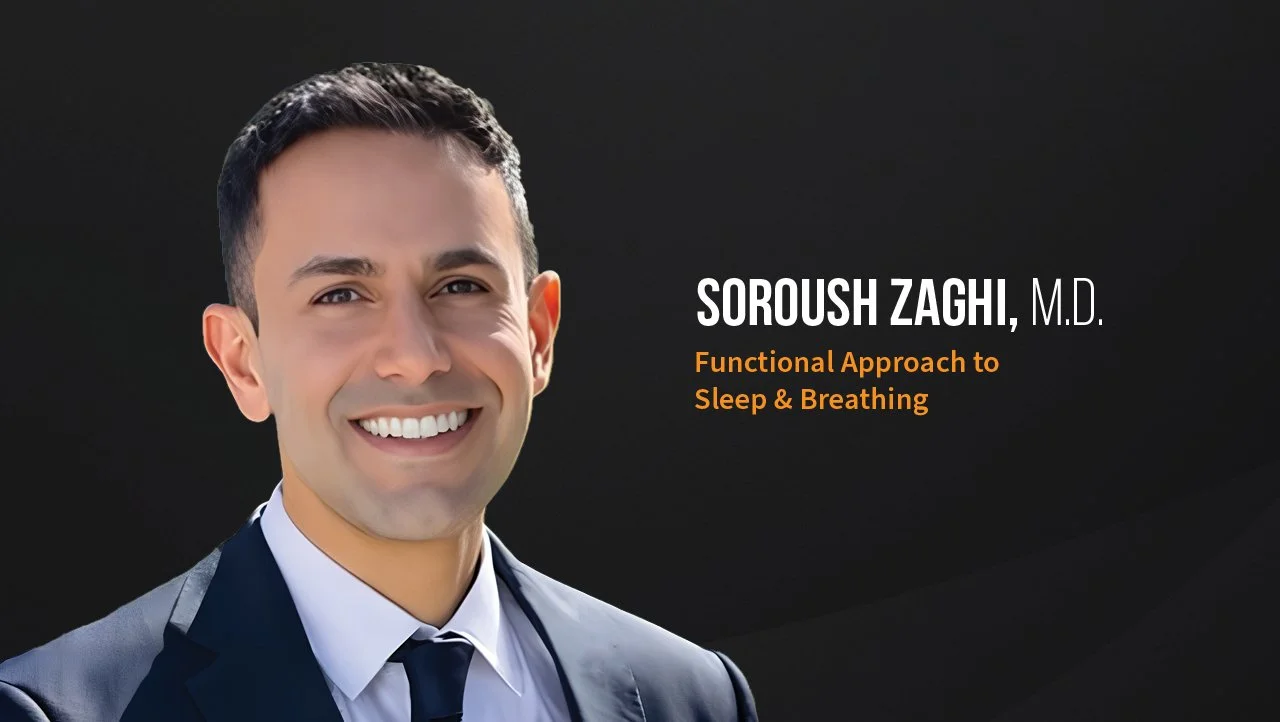
Soroush Zaghi, M.D.
Dr. Soroush Zaghi is a specialist in Otolaryngology–Head and Neck Surgery with advanced training in sleep, breathing, tongue-tie, and myofunctional disorders. He graduated from Harvard Medical School, the University of California Los Angeles (UCLA), and Stanford University. He currently serves as the Medical Director of The Breathe Institute, where he leads a multidisciplinary team focused on the comprehensive treatment of nasal obstruction, mouth breathing, snoring, and obstructive sleep apnea across the lifespan.
Dr. Zaghi is widely published, with over 100+ peer-reviewed articles spanning the fields of neuroscience, head and neck surgery, myofunctional therapy, sleep-disordered breathing, and tongue-tie surgery. His clinical and academic work emphasizes the role of tethered oral tissues and oral myofascial dysfunction in craniofacial development, upper airway resistance syndrome, and pediatric and adult sleep-disordered breathing.
As an invited speaker, author, and journal reviewer, Dr. Zaghi is dedicated to advancing a functional, root-cause approach to airway health, offering education and training to providers around the world in the evaluation and management of tongue-tie and related disorders.

